Description
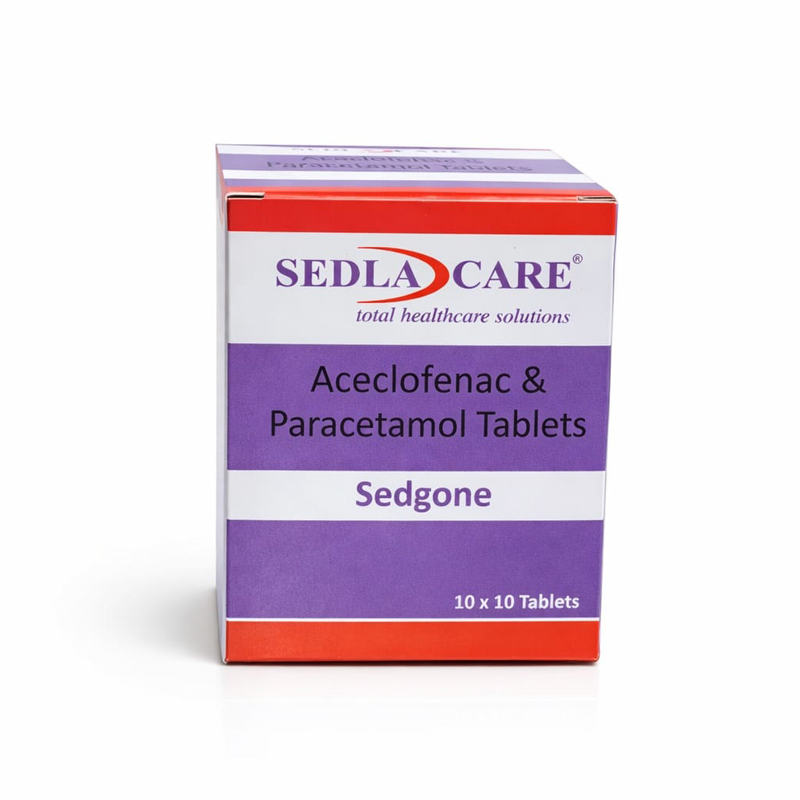
Sedgone Tablets (Aceclofenac 100 mg + Paracetamol 325 mg): Uses, Dosage & Safety Information
Sedgone Tablets are a combination pain-relieving medicine containing Aceclofenac 100 mg and Paracetamol 325 mg. This combination is formulated to provide effective relief from pain, inflammation, swelling, and fever associated with a range of musculoskeletal and inflammatory conditions.
Aceclofenac is a non-steroidal anti-inflammatory drug (NSAID) that helps reduce the production of substances responsible for pain and inflammation. Paracetamol is an analgesic and antipyretic that helps reduce pain and fever. Together, these medicines provide complementary pain-relieving and anti-inflammatory effects.
Sedgone Tablets may be prescribed for conditions such as musculoskeletal pain, joint pain, arthritis-related discomfort, dental pain, and other painful inflammatory conditions. Use the medicine only as directed by a qualified healthcare professional.
What are Sedgone Tablets?
Sedgone Tablets contain:
- Aceclofenac 100 mg
- Paracetamol 325 mg
Aceclofenac works primarily by reducing the formation of prostaglandins, chemical substances involved in pain, inflammation, and swelling. By reducing prostaglandin production, it helps relieve inflammatory pain and associated discomfort.
Paracetamol works mainly through the central nervous system to reduce pain and fever. It complements the action of Aceclofenac and contributes to the overall analgesic effect of the formulation.
The combination is designed for oral administration and should be taken only as recommended by a healthcare professional.
How Sedgone Tablets Work
Sedgone combines the actions of Aceclofenac and Paracetamol to provide relief from pain and inflammation.
Action of Aceclofenac
Aceclofenac belongs to the NSAID class. It inhibits cyclooxygenase (COX) enzymes involved in prostaglandin formation.
Reduced prostaglandin production helps decrease:
- Pain
- Inflammation
- Swelling
- Tenderness associated with inflammatory conditions
Action of Paracetamol
Paracetamol provides analgesic and antipyretic effects. It helps reduce the perception of pain and lowers elevated body temperature.
The two active ingredients therefore work through complementary mechanisms to provide broader symptomatic relief.
Indications of Sedgone Tablets
Sedgone Tablets may be prescribed for the management of pain and inflammation associated with conditions such as:
- Musculoskeletal pain
- Joint pain
- Osteoarthritis
- Rheumatoid arthritis
- Back pain
- Sprains and strains
- Dental pain
- Post-operative pain
- Inflammatory conditions
- Pain associated with musculoskeletal disorders
- Fever associated with painful conditions
The exact indication and treatment duration should be determined by the treating healthcare professional.
Benefits of Sedgone Tablets
Effective Pain Relief
Sedgone combines two analgesic agents to help provide relief from mild to moderate pain associated with various conditions.
Helps Reduce Inflammation
Aceclofenac helps reduce inflammatory processes responsible for pain, swelling, and tenderness.
Helps Relieve Joint and Musculoskeletal Pain
The formulation may be prescribed for painful conditions affecting muscles, joints, and other parts of the musculoskeletal system.
Helps Control Fever
Paracetamol provides antipyretic action and can help reduce fever associated with painful conditions.
Dual-Action Formulation
The combination of Aceclofenac and Paracetamol provides complementary analgesic effects, helping address pain from different pathways.
Dosage and Administration
Sedgone Tablets should be taken only according to the prescription and advice of a qualified healthcare professional.
Recommended Usage
- Take Sedgone exactly as prescribed by your doctor.
- Swallow the tablet whole with sufficient water.
- It is generally preferable to take the medicine with or after food if advised by your healthcare professional.
- Do not crush or chew the tablet unless specifically instructed.
- Do not exceed the recommended dose.
- The duration of treatment depends on the patient’s condition and response to therapy.
- Do not continue using the medicine for longer than recommended without medical advice.
The appropriate dosage may vary depending on the patient’s age, medical history, severity of symptoms, and response to treatment.
Safety Information
Before using Sedgone Tablets, inform your healthcare professional about your medical history and any medicines you are currently taking.
Important precautions include:
- Prescription medicine only.
- Use Sedgone under the supervision of a qualified medical practitioner.
- Patients with liver or kidney disorders should consult their physician before use.
- Patients with a history of stomach ulcers, gastrointestinal bleeding, or other gastrointestinal disorders should inform their doctor.
- Inform your doctor if you have a history of heart-related conditions or high blood pressure.
- Do not use the medicine if you have a known allergy or hypersensitivity to Aceclofenac, Paracetamol, or other NSAIDs.
- Avoid taking additional medicines containing Paracetamol unless advised by a healthcare professional.
- Do not exceed the prescribed dose.
- Inform your doctor about all prescription medicines, over-the-counter medicines, and supplements you are taking.
Who Should Consult a Doctor Before Using Sedgone?
Medical advice is particularly important for patients who have:
- Liver disease
- Kidney disease
- Stomach ulcers or gastrointestinal problems
- Previous gastrointestinal bleeding
- Heart disease
- High blood pressure
- Asthma triggered or worsened by NSAIDs
- A history of allergic reactions to painkillers or NSAIDs
Pregnant or breastfeeding women should consult their healthcare professional before taking Sedgone Tablets.
Possible Side Effects
Like other medicines, Sedgone Tablets may cause side effects in some individuals. Possible side effects can include:
- Nausea
- Vomiting
- Indigestion
- Stomach discomfort
- Diarrhea
- Dizziness
- Headache
If any side effect becomes severe, persistent, or unusual, seek medical advice promptly.
Serious symptoms such as signs of gastrointestinal bleeding, severe allergic reactions, difficulty breathing, or significant skin reactions require immediate medical attention.
Drug and Medicine Precautions
Tell your healthcare professional if you are taking other medicines, particularly:
- Other NSAID painkillers
- Medicines containing Paracetamol
- Blood-thinning medicines
- Certain medicines used for high blood pressure
- Medicines affecting kidney function
- Medicines that may affect liver function
- Other prescription or over-the-counter pain medicines
Do not combine Sedgone with another Paracetamol-containing product unless specifically advised by your doctor, as taking excessive Paracetamol can cause serious liver damage.
Frequently Asked Questions (FAQ)
1. What are Sedgone Tablets used for?
Sedgone Tablets are used for the management of pain, inflammation, and fever associated with conditions such as musculoskeletal pain, joint pain, arthritis, dental pain, and other painful inflammatory conditions, as prescribed by a healthcare professional.
2. What is the composition of Sedgone Tablets?
Sedgone Tablets contain Aceclofenac 100 mg and Paracetamol 325 mg.
3. How does Sedgone work?
Sedgone combines Aceclofenac and Paracetamol. Aceclofenac helps reduce inflammation and pain by reducing prostaglandin production, while Paracetamol provides analgesic and antipyretic effects.
4. Can Sedgone Tablets be used for joint pain?
Yes. Sedgone may be prescribed for joint pain and inflammation associated with conditions such as osteoarthritis and rheumatoid arthritis. The appropriate treatment should be determined by a healthcare professional.
5. Can Sedgone Tablets help with dental pain?
Sedgone may be prescribed to help manage dental pain and inflammation. Follow the dosage recommended by your dentist or physician.
6. Can Sedgone Tablets reduce fever?
Yes. Paracetamol in Sedgone provides antipyretic action and may help reduce fever associated with painful conditions.
7. Should Sedgone be taken after food?
Sedgone should be taken according to your doctor’s instructions. Taking NSAID-containing medicines with or after food may be recommended to reduce stomach discomfort.
8. Can I take another Paracetamol medicine with Sedgone?
Do not take another medicine containing Paracetamol unless your doctor specifically advises you to do so. Combining Paracetamol-containing products can result in an excessive total dose and increase the risk of liver damage.
9. Can patients with liver or kidney problems take Sedgone?
Patients with liver or kidney disorders should consult their healthcare professional before using Sedgone. Your doctor can determine whether the medicine is appropriate based on your medical condition.
10. Is Sedgone available without a prescription?
Sedgone should be used under the guidance of a qualified healthcare professional. Follow the prescription and dosage instructions provided by your doctor.